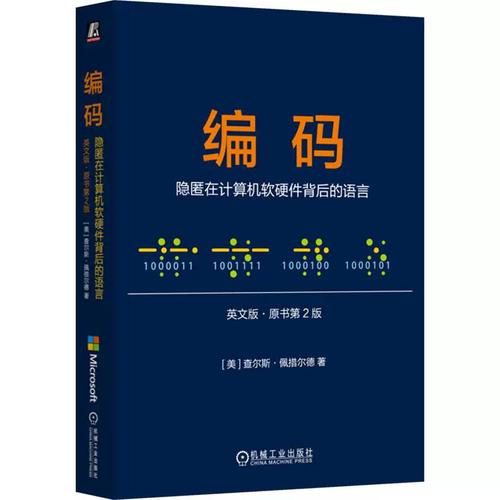
In the vast landscape of computer science literature, few books manage to bridge the gap between the abstract world of software and the tangible reality of hardware as elegantly as Charles Petzold's Code: The Hidden Language of Computer Hardware and Software. The second edition of this classic work, now available in English, remains a cornerstone for anyone seeking to understand how computers truly work—from the simplest electrical circuit to the complexities of modern microprocessors and operating systems. This article explores the book's unique approach, its relevance to both software and hardware technologies, and why it remains an indispensable resource for learners and professionals alike.
Petzold's central premise is that computer code is not merely a set of instructions for a machine but a language built upon layers of abstraction, each rooted in physical phenomena. Starting with Morse code, Braille, and the telegraph, the book demonstrates how humans have long used coding systems to transmit information. From there, Petzold methodically constructs a narrative that moves seamlessly from electrical relays and logic gates to binary arithmetic, memory, and finally to assembly language and high-level programming. What sets Code apart is its historical and pedagogical depth: every concept is introduced through a relatable problem or invention, making even daunting topics like Boolean algebra and flip-flops accessible to non-engineers.
The second edition updates the original 1999 text with modern context while retaining its core focus. Petzold expands discussions on the CPU, memory models, and the evolution of programming languages, yet he never loses sight of the fundamental question: how do transistors arranged in silicon come to execute complex software? By the end of the book, readers understand not only what a byte is or how logic gates work but also why the von Neumann architecture dominates computing and how an instruction set translates into physical voltage changes. This holistic view is precisely what the subtitle promises: the hidden language of computer hardware and software.
What makes this edition particularly valuable is its treatment of software-hardware symbiosis. Many modern textbooks separate these domains, leaving students with a fragmented understanding—programmers who don't understand timing circuits, or hardware engineers who treat compilers as magical black boxes. Petzold refuses such compartmentalization. He shows how a compiler generates machine code, how an operating system manages memory maps, and how the CPU's finite state machine enacts each instruction. In doing so, Code provides a unified mental model of computing that is increasingly rare in specialized curricula.
Critics and educators have praised the book for its engaging prose and zero prerequisite assumptions. It requires no prior knowledge of electronics or programming, making it ideal for self-learners, computer science undergraduates, and even hobbyists. Yet it is far from superficial; later chapters delve into the practical workings of microcontrollers and address bus architectures with surprising rigor. The numerous diagrams, circuit schematics, and binary puzzles reinforce learning, and Petzold's use of humorous anecdotes—such as building a simple computer called the "HYPOTHETICAL" machine—ensures that the material feels approachable rather than intimidating.
In an era when abstracted layers hide most of computing's complexity, Code: The Hidden Language of Computer Hardware and Software (2nd Edition) serves as a guide back to first principles. It demystifies the mysterious journey from flip-flop to CPU pipeline and encourages readers to appreciate the elegance of abstraction while respecting the physics beneath. Whether you are a software engineer curious about the machine you program, a hardware designer seeking to understand the language your circuits interpret, or simply a curious reader drawn to how things work, this book offers clarity, insight, and intellectual satisfaction. It is not just a book about computers—it is a book about how we encode meaning into matter, and in doing so, unlock the remarkable capabilities of modern technology.